First of all, how? Didn’t we just figure out swaddles?
And now suddenly you’re Googling things like “how much should a 6 month old eat” and “is this gagging or choking” while staring at mashed avocado on the ceiling.
Welcome to solids.
Let’s talk about what a real-life 6 month old feeding schedule looks like. Not the perfect Pinterest version. The one where the baby eats two bites and then tries to feed the dog.
Milk is still the main thing right now. Solids are more like… practice. Exploration. A sensory experience. A mess generator.
And if you’re feeling unsure? You’re normal
First: Is My Baby Even Ready for Solids?
Around six months, most babies show signs they’re ready.
Not because the calendar says so. But because they say so.
Look for:
Sitting with little support
Good head control
Reaching for your food
Opening their mouth when you offer a spoon
One mom told me, “The day I tried to eat toast and my daughter lunged at it like a tiny raccoon, I knew.”
That’s usually how it goes.
If you’re unsure, your pediatrician can guide you. The American Academy of Pediatrics supports starting solids around 6 months for most babies.
The Big Reminder: Milk Still Comes First
The Best Forgetting: Milk Comes First.
This is where we become confused a lot.
Breastmilk or formula continues to be the primary means of nutrition at 6 months.Milk is not yet replaced by solids.
Think of it like this:
Milk = main course
Solids = side quest
Majorities of babies continue with an average of 24-32 ounces of milk each day, usually divided into 4-6 feeds.
When breastfeeding, it might not seem so quantifiable. That’s okay. Diapers tell the story.
Six or more wet diapers a day? You’re doing great.
A Realistic 6 Month Old Feeding Schedule
This isn’t strict. This is flexible. Because babies are not robots.
Sample Day:
6:30 a.m. – Milk 9:00 a.m. – Milk + small solids meal 1:00 p.m. – Milk 4:00 p.m. – Milk 6:30 p.m. – Milk before bed
That’s it.
Notice something?
There’s only one solids meal.
That’s completely fine at 6 months.
Some babies do two. Some barely eat any. Both can be normal.
How Much Should a 6 Month Old Eat?
Here’s the honest answer.
Not much.
You might offer:
1–2 tablespoons of puree
Or a few soft finger-sized pieces of food
And they might eat half of it.
Or smear it into their eyebrows.
One dad told me, “I spent 20 minutes steaming carrots and she licked it once.”
Yep.
This stage is about learning:
How to move food around
How to chew
How to swallow
How to exist with food in their mouth without panicking you
Baby-Led Weaning or Purees?
Ah yes. The debate.
Here’s the thing. It doesn’t have to be either/or.
Purees feel less scary for many parents. Spoon-fed. Smooth. Controlled.
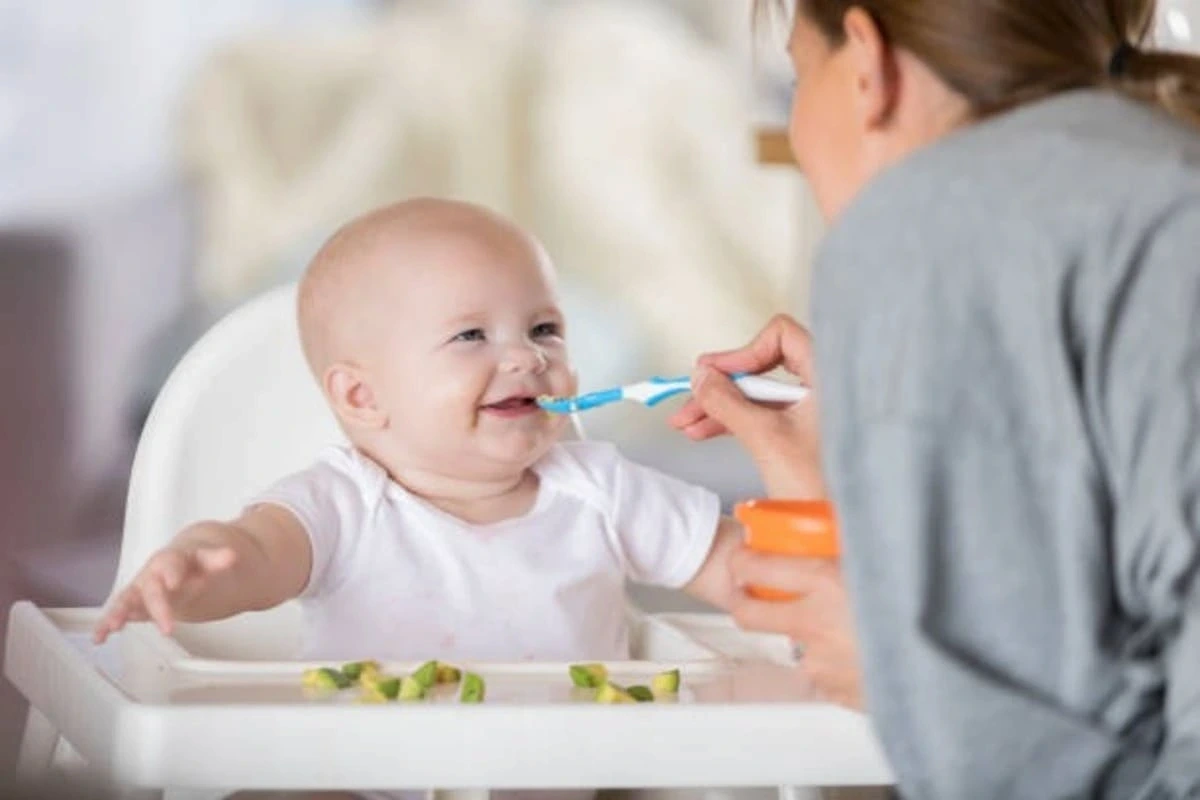
Baby-led weaning (BLW) means soft finger foods they feed themselves. Avocado slices. Soft banana spears. Steamed carrot sticks.
One mom said, “BLW felt terrifying for three days. Then I realized gagging is loud and dramatic and usually normal.”
That’s important.
Gagging is common. Choking is silent and serious.
If baby coughs, makes noise, turns red — that’s gagging. If baby is silent and struggling to breathe — that’s choking.
If you can, take an infant CPR class. It gives real peace of mind.
What Foods Are Good at 6 Months?
Keep it simple.
Iron matters a lot at this age.
Good first foods:
Iron-fortified oatmeal cereal
Lentils
Shredded chicken
Mashed beans
Tofu
Egg
Add vitamin C foods (like mashed mango or broccoli) to help absorb iron.
And yes, rice cereal is still okay — just rotate grains. Oats, barley, quinoa. Variety is your friend.
The World Health Organization also recommends continuing breastfeeding alongside solids up to 2 years and beyond.
What About Allergens?
This part makes everyone nervous.
Current guidance actually supports introducing common allergens around 6 months.
That includes:
Peanut
Egg
Dairy
Wheat
Fish
Sesame
Start small. One new allergen at a time. Earlier in the day is helpful so you can watch for reactions.
Mild rash? Call your pediatrician. Trouble breathing or swelling? That’s emergency care.
Most babies tolerate allergens just fine.
Night Feedings at 6 Months
Let’s talk about sleep. Because feeding and sleep are basically roommates.
Some 6 month olds still wake once or twice to eat.
Some magically sleep 10 hours.
There’s a range.
You don’t have to drop night feeds unless:
Your pediatrician recommends it
Baby naturally stops waking
If they wake hungry, feed them. That’s not “bad habits.” That’s biology.
Can Babies Drink Water?
Yes. A little.
Offer small sips in an open cup at mealtime.
It will spill. Everywhere.
That’s okay.
Open cups are actually better for oral development than sippy cups with valves. It feels chaotic at first. But babies learn fast.
What About Vitamin D?
Breastfed babies typically need 400 IU of vitamin D daily.
Formula-fed babies may get enough through fortified formula, but check with your pediatrician.
Tiny drop. Big impact.
Now Let’s Zoom Out: Feeding Schedule 6 to 12 Months
Because this stage changes quickly.
6–8 Months
Milk: 4–6 feeds per day
Solids: 1–2 small meals
No real need for snacks
Focus on iron-rich foods
9–10 Months
Things shift.
Solids: 2–3 meals
Possibly 1 small snack
More textured foods
More chewing practice
You’ll notice your baby actually eating instead of just experimenting.
11–12 Months
Closer to toddler territory.
3 meals
1–2 snacks
Milk still important, but solids are doing more work
Around 9–12 months, whole milk (3.25%) can be introduced if your baby is eating iron-rich foods regularly. Low-fat milk waits until after age 2.
And somewhere in here, you’ll slowly move away from bottles toward cups.
Weaning Off the Bottle (Without Tears… Hopefully)
Start by replacing daytime bottles with cups.
Keep bedtime bottle for last.
Swap it with:
Reading
Singing
Rocking
It doesn’t have to be dramatic. Slow and steady works.
Common Things That Freak Parents Out
Let’s normalize some stuff.
Baby eats nothing for two days.
Baby suddenly hates a food they loved yesterday.
Baby throws food constantly.
Baby goes through a “nursing strike.”
A nursing strike is just a temporary refusal. Often teething. Often distraction. Usually short-lived.
Appetite will go up and down. Growth spurts change everything.
If diapers are good and baby is growing? You’re okay.
Do Babies Under 1 Need Snacks?
At 6 months? Not really.
Milk fills the gaps.
Closer to 9–12 months, small snacks can help. Think yogurt, soft fruit, toast strips.
But don’t stress about squeezing in snacks at 6 months. One solids meal is fine.