Pregnancy makes you question everything.A scan result, a comment of somebody and you are in the depth of Google searches.
When you are told you have an anterior placenta, and you are experiencing back pain, it is natural to ask:
“Is this related?”
Many women go online searching for anterior placenta more back pain in hopes of a clear answer of their link to each other. The truth? It is not that simple as it sounds, but we will walk through it.
What Does Anterior Placenta Even Mean?
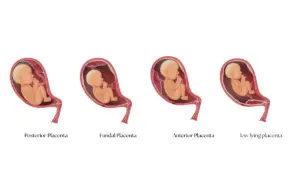
Simply put, it simply implies that your placenta is connected to the front wall of your uterus.
That’s all.
It doesn’t mean something is wrong.It does not necessarily put your pregnancy at risk. It’s just… positioning.
There are those women who have it on the back. Some at the top. Yours happens to be in the front.
And in the majority of cases, it does not make any visible problems.
Does Anterior Placenta Cause More Back Pain?
No–back pain is not a direct result of an anterior placenta.
Majority of the back pain during pregnancy is a result of factors such as postural changes, weight gain and hormonal changes.The position of the placenta does not have a direct bearing.
That said, some women feel like their back pain is worse and there’s a reason for that.
So Why Does It Feel Connected?
This is where most of the confusion comes from.
Because sometimes, it does feel connected. And honestly, that’s not random.
It Might Be Your Baby’s Position
Not the placenta, the position of the baby.
With an anterior placenta, babies sometimes settle in positions that put more pressure toward your back. Especially if they’re facing forward.
And that can feel like:
a constant dull ache
pressure that sits deep in your lower back
discomfort that doesn’t fully go away, even when you lie down
It’s subtle, but noticeable.
You Might Be Feeling Movements Differently
One thing many moms don’t expect, movements can feel… muted.
The placenta sits in front, acting like a soft barrier. So kicks don’t always feel sharp or obvious.
Instead, you might notice:
softer movements
delayed kicks
more sensation deeper inside, sometimes toward your back
And occasionally, that “movement” feels more like pressure than a kick.
Your Body Is Adjusting (More Than You Realize)
This part sneaks up on you.
As your belly grows, your posture changes without you consciously noticing it. You lean back a little. You shift your weight. You stand differently.
Over time, that adds up.
Your lower back ends up taking most of the strain—and that’s where the pain comes from in most pregnancies.
Not the placenta.
And Then There Are Hormones
Pregnancy hormones are doing a lot behind the scenes.
Especially one called relaxin. It loosens your ligaments so your body can prepare for delivery.
Helpful? Yes.
Comfortable? Not always.
Because looser joints mean:
less support for your spine
more muscle fatigue
and yep… more back pain
Again, this happens whether your placenta is anterior or not.
What Does Science Actually Say?
There’s no clear medical link between anterior placenta and back pain.
Most research focuses on something else, how placenta position affects fetal movement perception.
No. There’s no proven connection.You are more likely to be experiencing pain because of the changes in posture, muscle strain or hormones, and not because of placenta position.
Your expanding belly changes your center of gravity.That presents an additional load on your lower back, thus explaining the discomfort many women experience in this area.
Proper posture, supportive pillows, correct shoes and light stretching can all be helpful.The slightest modifications in everyday routine are significant with time.